Every School in Africa Needs Not Just Classrooms But Books. Here’s Why.

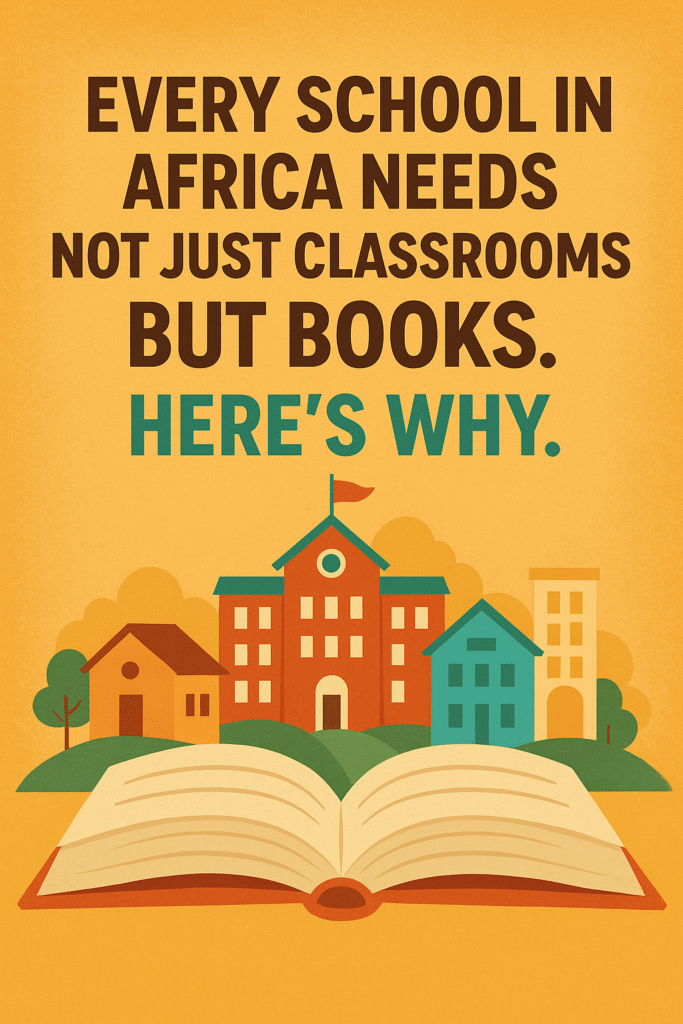
When we talk about building schools in Africa, the conversation often revolves around infrastructure: classrooms, desks, chairs, and blackboards. While these are important, one crucial element is often overlooked—books. Schools without books are like gardens without seeds: the structure is there, but growth is impossible.
1. Books Are Windows to the World
Books open doors to ideas, cultures, and knowledge that classrooms alone cannot provide. A well-stocked library exposes students to science, history, technology, and literature, helping them think critically, creatively, and globally. Without books, students are limited to the experiences of their immediate surroundings.
2. Literacy Is the Foundation of Development
Reading is the cornerstone of literacy, and literacy is the foundation of personal and national development. Countries with higher literacy rates consistently enjoy stronger economies, better health outcomes, and more engaged citizens. Providing books ensures that children can practice reading, develop comprehension skills, and cultivate a lifelong love for learning.
3. Books Build Independent Thinkers
Classrooms teach, but books empower students to learn independently. When children have access to books, they can explore topics beyond the syllabus, ask questions, and challenge ideas. This cultivates curiosity, problem-solving, and innovation—qualities Africa needs in the next generation of leaders, entrepreneurs, and creators.
4. Encouraging Equity and Opportunity
Not every child in Africa has access to private tutoring or internet resources. Books in schools level the playing field, giving all students—regardless of background—a chance to explore knowledge, develop skills, and dream bigger. Libraries and classroom bookshelves become tools of inclusion and empowerment.
5. A Culture of Learning and Imagination
Books do more than educate—they inspire. Stories fuel imagination, spark creativity, and nurture emotional intelligence. Schools that prioritize reading encourage students to dream beyond their current reality, building confidence and ambition.
Conclusion
Classrooms are important, but books are essential. They transform schools from mere buildings into hubs of knowledge, imagination, and opportunity. For Africa to truly thrive, we must invest not only in infrastructure but also in the materials that shape minds. Every school deserves books—not as a luxury, but as a necessity for the continent’s future.